MindSave Official Website › Notebook › The One Cognition Ingredient With An FDA Qualified Health Claim
The One Cognition Ingredient With An FDA Qualified Health Claim
Most of what a supplement label says is a structure and function statement that nobody pre-approved. One ingredient in this category is different, and reading what the FDA actually authorised is the fastest lesson in label literacy available.
- Three kinds of claim exist. Structure/function, health claim, and qualified health claim. They are not the same thing and the third is the odd one.
- Phosphatidylserine has the third. The FDA set the exact wording, and the wording includes that the evidence is very limited and preliminary.
- The positive trial used a form that is no longer sold. It was derived from bovine cortex; the version sold today is soy-derived.
- The soy trial found nothing. No significant difference from placebo on any outcome measure.
Three kinds of claim, and why the difference matters
The FDA recognises three categories of claim on a supplement label, and almost everything you read belongs to the first.
A structure and function claim says what an ingredient does to the body: supports memory, supports focus. It is not pre-approved. The manufacturer must hold substantiation and notify the agency within thirty days of marketing, and the label must carry the disclaimer that the statement has not been evaluated by the FDA, because only a drug can legally make a disease claim.
A health claim is authorised by regulation and requires significant scientific agreement. Those are rare.
A qualified health claim sits between them: it is for emerging evidence that does not meet the significant-agreement standard, allowed under enforcement discretion with mandatory qualifying language attached.
| The claim | Who reviews it before it appears | What has to appear with it |
|---|---|---|
| Structure and function | Nobody, in advance. The manufacturer holds the substantiation and notifies the agency within thirty days of marketing. | The statutory disclaimer, because only a drug can legally make a disease claim. |
| Health claim | The FDA, by regulation, against a standard of significant scientific agreement. | The authorised wording, which the regulation sets. |
| Qualified health claim | The FDA, by letter, under enforcement discretion, for evidence that does not reach that standard. | The authorised wording and the qualifying language, which is part of the claim rather than a footnote to it. |
Enforcement discretion is a decision not to object, and it is not approval. No supplement label may tell you the agency approved what it prints.
What the FDA actually authorised for phosphatidylserine
The 2003 letter set the exact wording, and it is worth reading for the qualifications rather than the claim. The authorised statements say that consumption of phosphatidylserine may reduce the risk of dementia and cognitive dysfunction in the elderly, and then attach, in the same breath, that the FDA concludes there is very limited and preliminary scientific research supporting it.
Here is the first of the two authorised statements in full, as the letter prints it, because no summary does the work the wording does:
“Consumption of phosphatidylserine may reduce the risk of dementia in the elderly. Very limited and preliminary scientific research suggests that phosphatidylserine may reduce the risk of dementia in the elderly. FDA concludes that there is little scientific evidence supporting this claim.” That is the authorised wording in the letter of enforcement discretion of 13 May 2003, reproduced here as a fact about the regulatory record. This website does not make that claim and does not sell a product that makes it.
That is what a qualified health claim is: a permission to say something with the doubt printed alongside. It appears on the FDA's published list of claims under enforcement discretion.
No product on this website makes that claim, and nothing here is written as a version of it. It is reproduced because it is the clearest published example of how much qualification sits behind a sentence that looks confident.
The qualification is part of the claim, down to the typeface
The agency did not simply permit a sentence. It specified how the sentence has to appear, and that detail is the most revealing part of the whole letter.
The qualifying language must sit immediately adjacent to and directly beneath the claim, with no intervening material, in the same size, typeface and contrast as the claim itself. A confident sentence set large and a qualification set small underneath it is exactly the failure that requirement exists to prevent.
The agency’s index lists three phosphatidylserine entries under cognitive function: 24 February 2003, 13 May 2003, and a letter of 24 November 2004 updating the claim, which keeps the same qualifying language. More than two decades on, the qualification has not moved.
The second authorised statement is the first with one noun changed: “cognitive dysfunction” in place of “dementia”. Both name a disease, which is why this post quotes the letter as a fact about the regulatory record and never paraphrases it into this website’s own voice. Nothing here is a version of that claim.
The detail almost every page leaves out
The evidence behind that claim rests substantially on a 1991 trial: 300 mg a day, given as 100 mg three times daily, for twelve weeks.
The phosphatidylserine in that trial was derived from bovine cortex. Supply moved to soy-derived material afterwards, for reasons that had nothing to do with efficacy, and the soy version is what is sold today.
The trial of the soy form gave 300 or 600 mg a day for twelve weeks to 120 people over 57 with age-associated memory impairment. It found no significant difference from placebo on any outcome variable: not delayed recall, not recognition, not reaction time, not planning, not attention. Its own conclusion is that a daily soy phosphatidylserine supplement does not affect memory or other cognitive functions in older individuals with memory complaints.
The safety arm of the same trial found it well tolerated, which is a separate and useful finding.
So the honest summary of the most-decorated ingredient in this category is: a qualified claim the FDA itself qualified heavily, resting on a trial of a form that is no longer sold, with the form that is sold having failed a twelve-week trial of its own. That is a great deal more interesting than “FDA qualified health claim” on a banner.
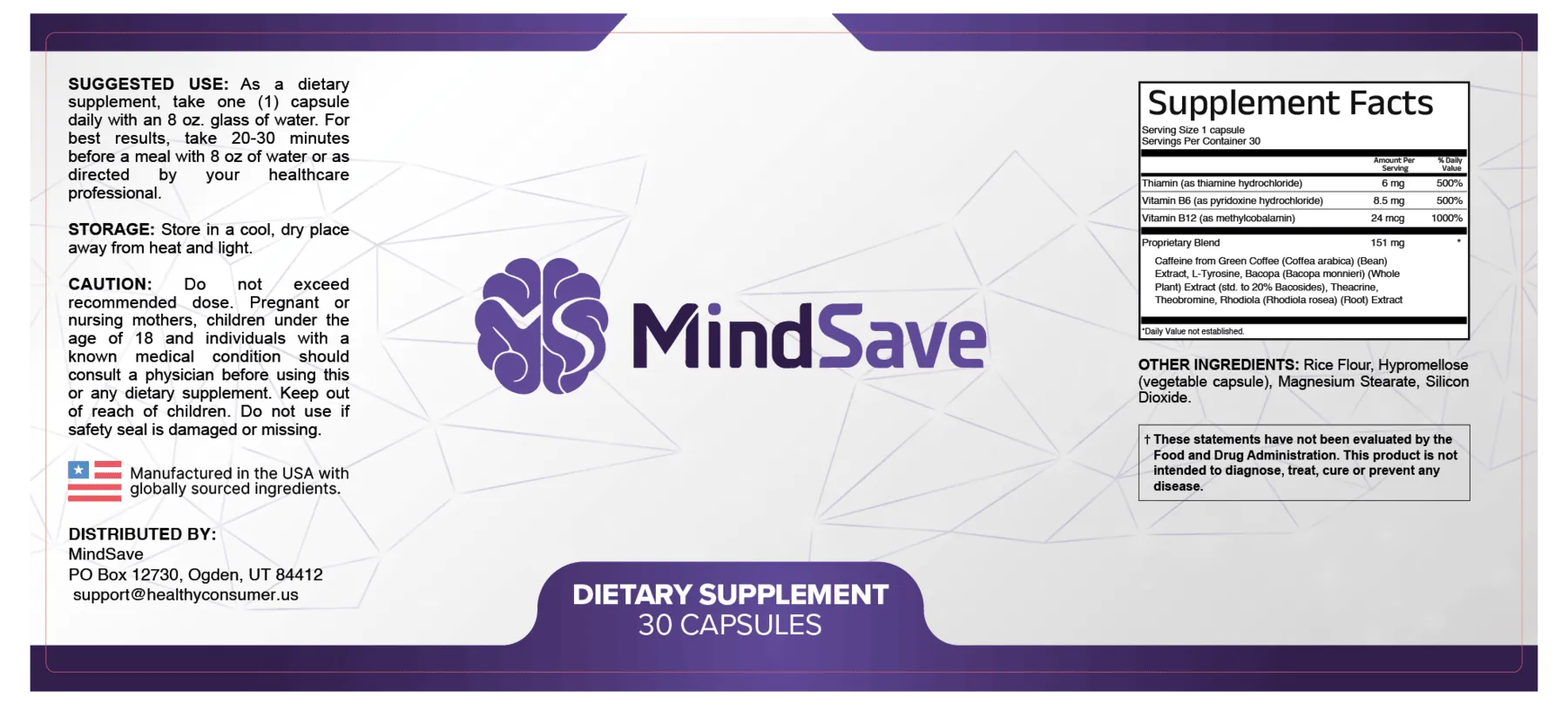
The ingredients page carries the same detail for all eight names on this label, and the reference guide explains the three claim categories in full.
What the form question means on a shelf
Two practical things follow from that, and neither is the one a banner would give you.
The first is about supply. The material in the positive trial came from bovine cortex. Production moved to soy-derived phosphatidylserine afterwards, for reasons that had nothing to do with whether it worked, and soy is what is sold. So a shopper reading the words “qualified health claim” beside phosphatidylserine is being pointed at an evidence base built on a different material from the one in the bottle.
The second is that the soy trial did establish something, just not what its sponsors would have wanted. Its safety arm found no significant differences in biochemical or haematological safety parameters, blood pressure, heart rate or adverse events in the same 120 people over 57 with age-associated memory impairment, at 300 and 600 mg a day for twelve weeks, and concluded that soy-derived phosphatidylserine is a safe nutritional supplement for older persons if taken up to 200 mg three times daily. A null efficacy result and a clean safety result from one trial are two separate findings and both are worth having.
And none of those figures describes this capsule. The sales page names phosphatidylserine and prints no amount beside it, so 300 mg, 600 mg and 200 mg three times daily are what three published trials gave, and nothing more.
Four questions to ask of any claim on any label
- Is it about a structure or a function, or about a disease? “Supports memory” is the first. “Reduces the risk of dementia” is the second, and only a drug or an authorised claim may carry it.
- If a qualification is attached, is it attached properly? Same size, same typeface, same contrast, directly beneath, nothing in between.
- Who reviewed it? For almost everything on a supplement shelf the answer is nobody, in advance, and that is lawful and ordinary rather than a scandal. The obligation sits with the manufacturer.
- Does the packaging make the claim even where the sentence does not? 21 CFR 101.93(g) sets out ten criteria by which a statement becomes a disease claim, and they include the product’s name, the publications it cites and the class of products it is sold among.
There is a fifth reader of all this and it is not the FDA. The Federal Trade Commission judges advertising against a standard of competent and reliable scientific evidence, and it assesses the net impression of a whole advertisement rather than any single sentence in it. A page can be literally accurate line by line and still leave an impression the evidence does not support, which is the standard worth holding a supplement page to and the one this website tries to meet.
Which brings the phosphatidylserine story back to where it started. The most decorated ingredient in this category carries a federal claim whose own wording says there is little scientific evidence supporting it. Reading the qualification is not cynicism. It is the fastest label-reading lesson available, and it is free.
The memory-and-aging trials behind that claim are not phosphatidylserine's only research thread, either. A separate line of trials studied it for cortisol and exercise recovery in an entirely different population, with results that do not agree with each other on the mechanism.
A note on what this is. MindSave is a dietary supplement, not a medicine. Nothing in this post describes it as a treatment for dementia, Alzheimer’s disease or mild cognitive impairment, and no supplement is currently recommended for preventing cognitive decline. Memory or thinking that is changing in a way that worries you is a reason to be assessed by a clinician, not a reason to start a capsule.
Sources cited in this article
- Crook TH, Tinklenberg J, Yesavage J, Petrie W, Nunzi MG, Massari DC. Effects of phosphatidylserine in age-associated memory impairment. Neurology. 1991;41(5):644-9. PMID 2027477. https://pubmed.ncbi.nlm.nih.gov/2027477/
- Jorissen BL, Brouns F, Van Boxtel MP, Ponds RW, Verhey FR, Jolles J, Riedel WJ. The influence of soy-derived phosphatidylserine on cognition in age-associated memory impairment. Nutr Neurosci. 2001;4(2):121-34. PMID 11842880. https://pubmed.ncbi.nlm.nih.gov/11842880/
- Jorissen BL, Brouns F, Van Boxtel MP, Riedel WJ. Safety of soy-derived phosphatidylserine in elderly people. Nutr Neurosci. 2002;5(5):337-43. PMID 12385596. https://pubmed.ncbi.nlm.nih.gov/12385596/
- U.S. Food and Drug Administration, Center for Food Safety and Applied Nutrition. Letter of enforcement discretion - Phosphatidylserine and Cognitive Dysfunction and Dementia, 13 May 2003. FDA web archive. http://wayback.archive-it.org/7993/20171114183649/https://www.fda.gov/Food/IngredientsPackagingLabeling/LabelingNutrition/ucm072999.htm
- U.S. Food and Drug Administration. Qualified Health Claims: Letters of Enforcement Discretion. https://www.fda.gov/food/nutrition-food-labeling-and-critical-foods/qualified-health-claims-letters-enforcement-discretion
- Electronic Code of Federal Regulations. 21 CFR 101.93 - Certain types of statements for dietary supplements. https://www.ecfr.gov/current/title-21/chapter-I/subchapter-B/part-101/subpart-F/section-101.93
- U.S. Food and Drug Administration. Structure/Function Claims. https://www.fda.gov/food/nutrition-food-labeling-and-critical-foods/structurefunction-claims
- U.S. Food and Drug Administration. Label Claims for Conventional Foods and Dietary Supplements. https://www.fda.gov/food/nutrition-food-labeling-and-critical-foods/label-claims-conventional-foods-and-dietary-supplements
- Federal Trade Commission. Health Products Compliance Guidance. https://www.ftc.gov/business-guidance/resources/health-products-compliance-guidance
MindSave, on the official website
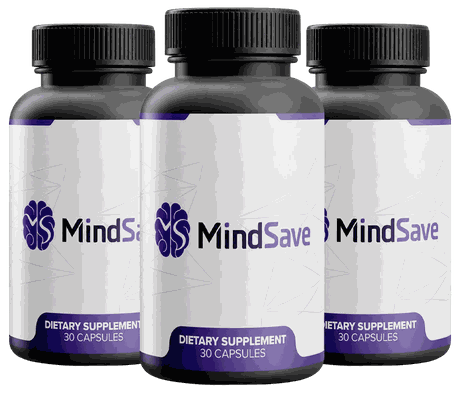
One capsule a day, thirty to a bottle, eight ingredients named on the label. Sixty days to change your mind, and the bottles go back even if they are empty.
Order MindSave