MindSave Official Website › Cognition Supplement Guide
A Guide To Reading A Cognition Supplement Label
A cognition supplement label is two things at once: a legal document with rules about what it must carry, and a marketing surface with a great deal of freedom about what it may leave out. Knowing which part you are reading is most of the skill, and it takes about five minutes to learn.
This guide covers the panel, the list, the durations and the six names.
What a Supplement Facts panel must carry
21 CFR 101.36 is short and worth knowing. A panel must declare a quantitative amount by weight, per serving, for every dietary ingredient that is not a listed nutrient. Where a proprietary blend is used, the blend must be named as one, its ingredients listed in descending order of weight, and its total weight declared on the same line.
So a panel always tells you something about quantity, even when it is hiding the split. A blend total is a ceiling: no single ingredient inside it can weigh more than the total.
A list of ingredient names on a sales page is not a panel and is not governed by that rule at all. It is a different document doing a different job, and the useful question is never how much is missing but which of your questions the list can still answer.
Three it answers completely: whether something you already take is in there, whether anything on it is worth raising with a prescriber, and whether this is even the kind of formula you were looking for. One it cannot answer at all: how this bottle compares with a published trial.
The three kinds of claim a label may carry
| Kind | What it is | Example on this shelf |
|---|---|---|
| Structure/function | Not pre-approved by the FDA. The maker must hold substantiation and notify the agency within thirty days, and the label must carry the disclaimer. | “Supports memory.” Almost everything on a cognition label is one of these. |
| Health claim | Authorised by regulation and requiring significant scientific agreement. | Rare in this category. |
| Qualified health claim | For emerging evidence that does not meet that standard, allowed under enforcement discretion with mandatory qualifying language. | Phosphatidylserine has one, and the FDA set the exact wording, which includes that the evidence is very limited and preliminary. It is on the published list. |
A statement becomes a DISEASE claim by ten criteria in 21 CFR 101.93(g), one of which is the class of products the item is positioned among. That is why a supplement may not be positioned against a prescription medicine, even by implication.
How long the trials in this category actually ran
This is the number almost nobody checks and it is free. A paper cannot hide how long it ran; the figure is in the abstract.
In this category the answer is usually months. Every bacopa monnieri trial in the systematic review ran twelve weeks, and the meta-analysis would not admit a trial shorter than that. The largest huperzine A trial ran at least sixteen weeks. The phosphatidylserine trial behind the qualified claim ran twelve.
Set that against a typical money-back window of thirty or sixty days and a useful question falls out: does the guarantee cover a fair test, or only the first third of one? It is worth asking of any bottle on this shelf, including this desk's.
Six names you will meet on almost every label here
Bacopa monnieri
The best-evidenced botanical in the category and the slowest. The review found improvement on free recall in nine of seventeen memory tests and little elsewhere.
Alpha GPC
A choline source. A two-dose trial in healthy men was mostly null on its primary measures. The safety literature has two sides that disagree: a 2021 cohort found higher stroke risk, a 2025 cohort points the other way, and EFSA assessed 203.7 mg a day.
Phosphatidylserine
The one ingredient here with a qualified health claim. The positive 1991 trial used the bovine-cortex form; the trial of the soy form sold today found no difference from placebo on any measure.
L-tyrosine
The US military's assessment made a weak recommendation for cognitive stress and said the evidence is insufficient for confident recommendations. The positive findings cluster in acute stress, and in healthy older adults it was increasingly detrimental with age on one measure.
GABA
Whether oral GABA reaches the brain is genuinely argued. Transport work found the barrier clearing it out at least sixteen times faster than it lets it in; the systematic review of oral GABA in people reports no data on barrier permeability in humans, limited evidence for stress, very limited for sleep, and that eleven of its fourteen trials had industry-employed authors. The safety review is the more useful document for a buyer.
Huperzine A
A purified alkaloid that inhibits acetylcholinesterase reversibly and selectively. Cochrane found no eligible placebo-controlled trial in mild cognitive impairment at all, which is an absence of evidence rather than a negative result. Its trial doses are in micrograms, which is three orders of magnitude below everything else here.
The ceiling on all of it is published and short. The National Institute on Aging: no vitamin or supplement is currently recommended for preventing Alzheimer's or other forms of cognitive decline. NCCIH says much the same. A label may support memory and focus; nothing on this shelf may claim more.
Two upper limits worth adding up
Two nutrients that turn up constantly in this category carry federal tolerable upper intake levels, and they are the only two figures on a cognition label you can genuinely overdo by stacking products.
Supplemental niacin sits under 35 mg a day for adults. Vitamin B6 sits under 100 mg a day from food and supplements together, and long-term intakes well above it are linked to sensory nerve damage.
If a label prints amounts, add them up across everything in the cupboard. If it does not, count the products that do, because those you can read.
And the advertising standard behind every claim you are reading is competent and reliable scientific evidence, assessed on the impression the whole advertisement leaves rather than on any one sentence.
Who writes this guide
Four claims, and they are the ones a sceptical reader can audit in ten minutes:
- The bottle is the source. The eight names, the capsule count, the serving direction and the caution block come from the printed label and the supplier’s artwork. Prices, shipping lines, bonus titles and the guarantee wording come from the seller’s own order page, read on 19 September 2026.
- Research amounts live in a column of their own, headed “What studies used”, beside a column that says what the label prints. No sentence here moves a number from the first into the second.
- Sources are cited against their own population. Where a trial was run in people with a diagnosis, the sentence says so and the result is not carried across to a healthy reader.
- Corrections change the date. Write to [email protected] and the review date moves forward.
We earn when you buy. Themindsave is the USA Authorized MindSave Retailer named at the top of this page and this website makes money on orders placed through it. That is exactly why the note on what a list of eight names is worth, the three-star reviews and the plain statement that MindSave is not a treatment for anything are here: they are where our interest and yours pull apart. Order support on +1 (302) 200-3480 handles tracking, changes and refunds and is never a way to place an order; orders go through the checkout only.
Sources for this guide
- NIH Office of Dietary Supplements. Niacin: Fact Sheet for Health Professionals. https://ods.od.nih.gov/factsheets/Niacin-HealthProfessional/
- NIH Office of Dietary Supplements. Vitamin B6: Fact Sheet for Health Professionals. https://ods.od.nih.gov/factsheets/VitaminB6-HealthProfessional/
- National Center for Complementary and Integrative Health, National Institutes of Health. 7 Things To Know About Dietary Supplements for Cognitive Function, Dementia, and Alzheimer's Disease. https://www.nccih.nih.gov/health/tips/things-to-know-about-dietary-supplements-for-cognitive-function-dementia-and-alzheimers-disease
- Hepsomali P, Groeger JA, Nishihira J, Scholey A. Effects of Oral Gamma-Aminobutyric Acid (GABA) Administration on Stress and Sleep in Humans: A Systematic Review. Front Neurosci. 2020;14:923. PMID 33041752. https://pubmed.ncbi.nlm.nih.gov/33041752/
- Kakee A, Takanaga H, Terasaki T, Naito M, Tsuruo T, Sugiyama Y. Efflux of a suppressive neurotransmitter, GABA, across the blood-brain barrier. J Neurochem. 2001;79(1):110-8. PMID 11595763. https://pubmed.ncbi.nlm.nih.gov/11595763/
- Oketch-Rabah HA, Madden EF, Roe AL, Betz JM. United States Pharmacopeia (USP) Safety Review of Gamma-Aminobutyric Acid (GABA). Nutrients. 2021;13(8):2742. PMID 34444905. https://pubmed.ncbi.nlm.nih.gov/34444905/
- Attipoe S, Zeno SA, Lee C, Crawford C, Khorsan R, Walter AR, Deuster PA. Tyrosine for Mitigating Stress and Enhancing Performance in Healthy Adult Humans, a Rapid Evidence Assessment of the Literature. Mil Med. 2015;180(7):754-65. PMID 26126245. https://pubmed.ncbi.nlm.nih.gov/26126245/
- Deijen JB, Wientjes CJ, Vullinghs HF, Cloin PA, Langefeld JJ. Tyrosine improves cognitive performance and reduces blood pressure in cadets after one week of a combat training course. Brain Res Bull. 1999;48(2):203-9. PMID 10230711. https://pubmed.ncbi.nlm.nih.gov/10230711/
- Bloemendaal M, Frobose MI, Wegman J, Zandbelt BB, van de Rest O, Cools R, Aarts E. Neuro-Cognitive Effects of Acute Tyrosine Administration on Reactive and Proactive Response Inhibition in Healthy Older Adults. eNeuro. 2018;5(2):ENEURO.0035-17.2018. PMID 30094335. https://pubmed.ncbi.nlm.nih.gov/30094335/
- Pase MP, Kean J, Sarris J, Neale C, Scholey AB, Stough C. The cognitive-enhancing effects of Bacopa monnieri: a systematic review of randomized, controlled human clinical trials. J Altern Complement Med. 2012;18(7):647-52. PMID 22747190. https://pubmed.ncbi.nlm.nih.gov/22747190/
- Kongkeaw C, Dilokthornsakul P, Thanarangsarit P, Limpeanchob N, Norman Scholfield C. Meta-analysis of randomized controlled trials on cognitive effects of Bacopa monnieri extract. J Ethnopharmacol. 2014;151(1):528-35. PMID 24252493. https://pubmed.ncbi.nlm.nih.gov/24252493/
- Marcus L, Soileau J, Judge LW, Bellar D. Evaluation of the effects of two doses of alpha glycerylphosphorylcholine on physical and psychomotor performance. J Int Soc Sports Nutr. 2017;14:39. PMID 29042830. https://pubmed.ncbi.nlm.nih.gov/29042830/
- EFSA Panel on Nutrition, Novel Foods and Food Allergens (NDA); Turck D, Bohn T, Camara M, et al. Safety of L-alpha-glycerylphosphorylcholine (L-alpha-GPC) from soya phospholipids (lecithin) as a novel food pursuant to Regulation (EU) 2015/2283. EFSA J. 2026;24(5):e10008. PMID 42131868. https://pubmed.ncbi.nlm.nih.gov/42131868/
- Lee G, Choi S, Chang J, Choi D, Son JS, Kim K, Kim SM, Jeong S, Park SM. Association of L-alpha Glycerylphosphorylcholine With Subsequent Stroke Risk After 10 Years. JAMA Netw Open. 2021;4(11):e2136008. PMID 34817582. https://pubmed.ncbi.nlm.nih.gov/34817582/
- Kim HK, Park S, Kim SW, Park ES, Hong JY, Hong I, Baek MS. Association between L-alpha glycerylphosphorylcholine use and delayed dementia conversion: A nationwide longitudinal study in South Korea. J Prev Alzheimers Dis. 2025;12(4):100059. PMID 40155153. https://pubmed.ncbi.nlm.nih.gov/40155153/
- U.S. Food and Drug Administration, Center for Food Safety and Applied Nutrition. Letter of enforcement discretion - Phosphatidylserine and Cognitive Dysfunction and Dementia, 13 May 2003. FDA web archive. http://wayback.archive-it.org/7993/20171114183649/https://www.fda.gov/Food/IngredientsPackagingLabeling/LabelingNutrition/ucm072999.htm
- U.S. Food and Drug Administration. Qualified Health Claims: Letters of Enforcement Discretion. https://www.fda.gov/food/nutrition-food-labeling-and-critical-foods/qualified-health-claims-letters-enforcement-discretion
- Crook TH, Tinklenberg J, Yesavage J, Petrie W, Nunzi MG, Massari DC. Effects of phosphatidylserine in age-associated memory impairment. Neurology. 1991;41(5):644-9. PMID 2027477. https://pubmed.ncbi.nlm.nih.gov/2027477/
- Jorissen BL, Brouns F, Van Boxtel MP, Ponds RW, Verhey FR, Jolles J, Riedel WJ. The influence of soy-derived phosphatidylserine on cognition in age-associated memory impairment. Nutr Neurosci. 2001;4(2):121-34. PMID 11842880. https://pubmed.ncbi.nlm.nih.gov/11842880/
- Yue J, Dong BR, Lin X, Yang M, Wu HM, Wu T. Huperzine A for mild cognitive impairment. Cochrane Database Syst Rev. 2012;12(12):CD008827. PMID 23235666. https://pubmed.ncbi.nlm.nih.gov/23235666/
- Rafii MS, Walsh S, Little JT, Behan K, Reynolds B, Ward C, Jin S, Thomas R, Aisen PS; Alzheimer's Disease Cooperative Study. A phase II trial of huperzine A in mild to moderate Alzheimer disease. Neurology. 2011;76(16):1389-94. PMID 21502597. https://pubmed.ncbi.nlm.nih.gov/21502597/
- Ha GT, Wong RK, Zhang Y. Huperzine A as potential treatment of Alzheimer's disease: an assessment on chemistry, pharmacology, and clinical studies. Chem Biodivers. 2011;8(7):1189-204. PMID 21766442. https://pubmed.ncbi.nlm.nih.gov/21766442/
- National Institute on Aging, National Institutes of Health. Cognitive Health and Older Adults. https://www.nia.nih.gov/health/brain-health/cognitive-health-and-older-adults
- Electronic Code of Federal Regulations. 21 CFR 101.36 - Nutrition labeling of dietary supplements. https://www.ecfr.gov/current/title-21/chapter-I/subchapter-B/part-101/subpart-C/section-101.36
- Electronic Code of Federal Regulations. 21 CFR 101.93 - Certain types of statements for dietary supplements. https://www.ecfr.gov/current/title-21/chapter-I/subchapter-B/part-101/subpart-F/section-101.93
- U.S. Food and Drug Administration. Structure/Function Claims. https://www.fda.gov/food/nutrition-food-labeling-and-critical-foods/structurefunction-claims
- U.S. Food and Drug Administration. Label Claims for Conventional Foods and Dietary Supplements. https://www.fda.gov/food/nutrition-food-labeling-and-critical-foods/label-claims-conventional-foods-and-dietary-supplements
- Federal Trade Commission. Health Products Compliance Guidance. https://www.ftc.gov/business-guidance/resources/health-products-compliance-guidance
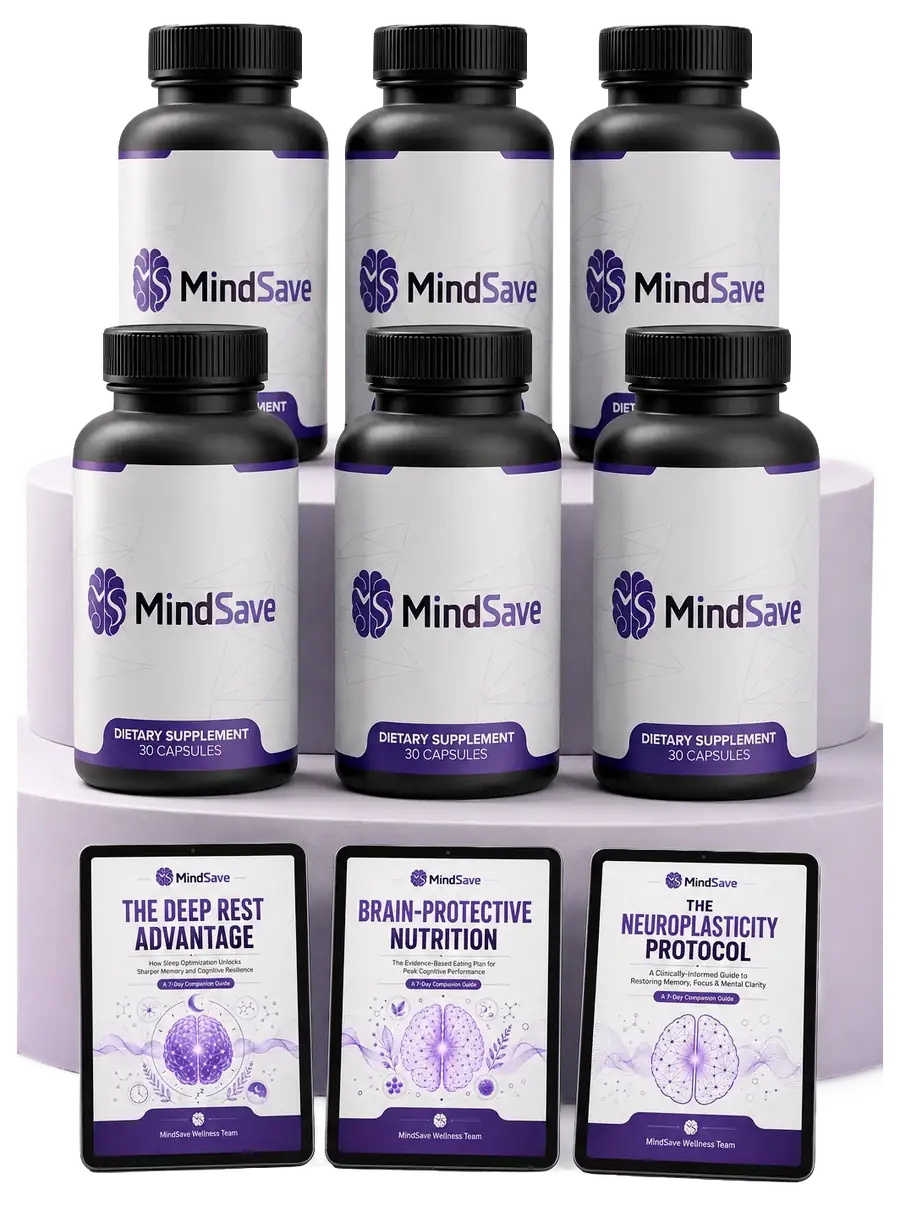
Order MindSave on the official website
One capsule a day, thirty to a bottle, and sixty days to change your mind.
$49 to $79 a bottle · 60 days to change your mind, and the bottles go back even if they are empty
Order MindSave On The Official WebsiteOne-time payment, no subscription · 60-day money-back guarantee · lot MIN-26/TH-5482