MindSave Official Website › Notebook › Where Huperzine A Actually Comes From
Where Huperzine A Actually Comes From
This notebook has already covered huperzine A's trial evidence and the anticholinergic-drug caution on MindSave's own safety page. What neither has covered is where the compound actually comes from before it is a capsule ingredient at all — a wild plant with naturally variable potency — or what the direct human tolerability trials, read on their own, actually found.
- It comes from a club moss. Huperzine A is extracted mainly from Huperzia serrata, a slow-growing lycopod traditionally harvested wild in China.
- Wild content is low and falling. Average wild-harvested Huperzia serrata contains only about 0.08 mg of huperzine A per gram dry weight, and the wild population is declining from over-harvesting.
- Content varies enormously by species. A survey of 17 related species found concentrations ranging from undetectable to more than twelve times the average wild Chinese source.
- Two real safety datasets exist. A cocaine-use-disorder trial and a Cochrane review of Alzheimer's trials both found huperzine A well tolerated, with mild adverse events at most.
A name that is also a plant
Huperzine A is not a synthetic molecule invented in a lab and then found to occur in nature; it is the other way around. The compound was first isolated from Huperzia serrata, a club moss — a lycopod, not a true moss despite the common name — long used in Chinese herbal medicine and still the primary commercial source of the alkaloid today. Before any capsule, any milligram figure or any clinical trial, huperzine A is a defensive plant chemical that a slow-growing, hard-to-cultivate species happens to produce in small and variable amounts.
That plant-level starting point matters for a label the same way a printed dose would: it sets a ceiling on how precisely “huperzine A” as a name can describe what is actually in a capsule, before any question about the finished product's own disclosed amount — which, as with MindSave's other seven names, is not disclosed at all.
How little a wild plant actually contains
A 2010 survey published in Pharmaceutical Biology puts a number on this. Wild-harvested Huperzia serrata from China, the dominant commercial source of huperzine A worldwide, contains on average only about 0.08 milligrams of the compound per gram of dry plant material — roughly eight hundredths of one percent by weight. The same paper notes that this wild source is experiencing a rapid decline in China due to over-harvesting, which is precisely what would be expected of a slow-growing plant supplying a low-yield compound to a growing global supplement market.

A twelve-fold range across related species
The same 2010 survey went looking for alternatives, screening seventeen Huperzia species from Australia and southeast Asia for their huperzine A and huperzine B content, alongside intra-specific variation in four species available in sufficient numbers. Eleven of the seventeen species contained detectable huperzine A. The standout was Huperzia elmeri, a species from the Philippines, which recorded one of the highest concentrations found in the entire survey: 1.01 milligrams per gram of dry weight — more than twelve times the average content of the wild Chinese Huperzia serrata that supplies most of the commercial market. The same paper also found huperzine concentration to be “extremely variable” within a single species and even within a single plant, with reproductive structures accumulating the highest concentrations of any tissue tested.
Put plainly: two plants of the same species, harvested a season apart or from different locations, can differ substantially in how much huperzine A they actually contain, and different species entirely can differ by an order of magnitude or more. That is the raw-material reality behind a name that appears on a supplement label as if it referred to one fixed, standardised substance.
Growing it instead of harvesting it
Because wild supply is limited and declining, researchers have worked on propagating Huperzia serrata under controlled conditions instead of relying on wild harvest. A 2021 study in the journal Plants developed an in vitro tissue-culture protocol for three genotypes of wild Huperzia serrata, optimising the growth medium to increase survival and biomass. High-performance liquid chromatography analysis of the resulting cultured tissue found huperzine A content of 53.90 to 87.17 micrograms per gram — measured in micrograms, not milligrams, and somewhat lower than the average wild-harvested content reported in the 2010 survey above. The point of that research was supply reliability and reduced pressure on wild populations, not necessarily higher potency, and the paper is explicit that this was a foundational protocol rather than a commercial-scale solution.
| Source | Huperzine A content |
|---|---|
| Wild Huperzia serrata, China (average) | ~0.08 mg/g dry weight |
| In vitro cultured Huperzia serrata (3 genotypes) | 53.90–87.17 µg/g (0.054–0.087 mg/g) |
| Huperzia elmeri, Philippines (highest surveyed) | 1.01 mg/g dry weight |
Figures describe raw plant material as reported in the two cited studies, not any finished capsule. MindSave's own label states no amount for huperzine A.
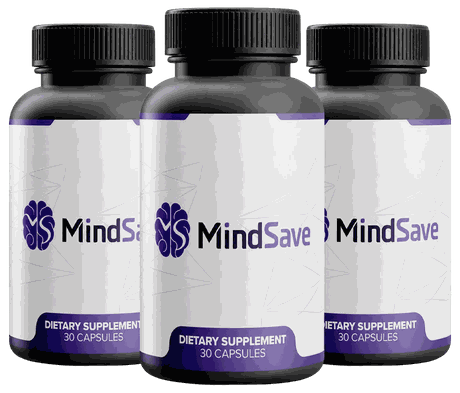
MindSave, on the official website
One capsule a day, thirty to a bottle, eight ingredients named on the label. Sixty days to change your mind, and the bottles go back even if they are empty.
Order MindSaveWhat a name on a label cannot tell you
A standardised bacopa extract is sometimes quoted on a label by its bacoside percentage, which at least tells a buyer something about concentration relative to raw leaf. “Huperzine A” on its own carries no such marker: it does not say whether the material came from wild-harvested Huperzia serrata, a cultivated source, a related species with naturally higher or lower content, or a fully synthetic route, and it does not say what extraction or standardisation step, if any, was applied before the ingredient reached a capsule. Combined with the fact that MindSave's sales page prints no milligram figure for huperzine A at all, a buyer is left without information from either end of the supply chain: not the raw material's own alkaloid content, and not the finished capsule's dose.
Two real safety datasets
Separate from the sourcing question, two published trials give a direct read on human tolerability, in contexts quite different from each other and from a typical cognition-supplement marketing claim.
The first, published in 2015, tested huperzine A not for cognition but as a potential treatment for cocaine use disorder, on the theory that acetylcholinesterase inhibitors might blunt psychostimulant effects. Fourteen to seventeen participants per group received 0.4 mg or 0.8 mg of huperzine A, or placebo, in a double-blind design, alongside controlled cocaine infusions. Huperzine A was reported as safe and well tolerated, producing no significant change in cocaine's own pharmacokinetics, and the 0.4 mg dose in fact reduced several subjective ratings of cocaine's effects. The paper's authors describe it as the first published report on huperzine A's safety and potential efficacy specifically in this population — a genuinely different context from every other huperzine A study already cited on this website.
The second is a 2008 Cochrane systematic review focused specifically on huperzine A for Alzheimer's disease, distinct from the mild-cognitive-impairment and vascular-dementia Cochrane reviews already covered elsewhere on this site. It pooled six trials totalling 454 patients and found statistically significant improvements on several measures: general cognitive function by the Mini-Mental State Examination, the Alzheimer's Disease Assessment Scale–Cognitive subscale at six and twelve weeks, global clinical assessment, behavioural disturbance, and daily-function scores. On adverse events specifically, the review's own words are direct: adverse events of huperzine A were mild, and there were no significant differences in adverse events between huperzine A groups and control groups. Despite those favourable numbers, the same review's authors concluded there was inadequate evidence to make any recommendation about huperzine A's use, because only one of the six included trials was judged to be of adequate methodological quality and size.
Putting the source and the safety data together
Two threads, read together, give a more complete picture than either the trial-evidence pages or the drug-interaction caution already on this site cover alone. On sourcing: huperzine A comes from a slow-growing, over-harvested wild plant whose own alkaloid content varies by more than an order of magnitude depending on species, growing conditions and even which part of the plant is used, so the bare name on a label carries very little information about potency by itself. On tolerability: two real human trials, in populations as different as a cocaine-use-disorder study and a pooled Alzheimer's-disease meta-analysis, both found huperzine A generally well tolerated at low, sub-milligram doses, with mild adverse events at most and no significant excess over placebo.
What neither thread resolves is efficacy for any cognitive claim a supplement label might make. The same Cochrane review that reports favourable pooled numbers on cognitive tests also concludes, in its authors' own words, that the evidence is inadequate to recommend huperzine A's use — a conclusion this notebook's own duration page and MindSave's side effects page already reach from different angles. Tolerability and effectiveness are two separate questions, and the honest reading of the published record answers them differently.
None of that is a reason to single out huperzine A as unusually poorly documented among the eight names on this label. Several of the others share the same basic shape: a real, describable mechanism; at least one line of human safety data that looks reassuring on its own; and an efficacy record that stops short of the kind of evidence a clinician would want before recommending it for a specific outcome. What sets huperzine A apart is simply that its supply chain runs through a single wild, slow-growing, declining plant species, which adds a layer of raw-material uncertainty that a synthetic vitamin or a widely cultivated botanical does not carry to the same degree.
A note on what this is. MindSave is a dietary supplement, not a medicine. Nothing in this post describes huperzine A as a treatment for Alzheimer's disease, dementia, cocaine use disorder or any other diagnosed condition. The trials described above studied huperzine A as an isolated compound in defined clinical populations under research or medical supervision, not this product, which states no amount for huperzine A or any of its other seven ingredients. Anyone taking a prescription medicine, particularly one that affects the cholinergic system, should speak to a clinician before adding any supplement.
Sources cited in this article
- Lim WH, Goodger JQ, Field AR, Holtum JA, Woodrow IE. Huperzine alkaloids from Australasian and southeast Asian Huperzia. Pharm Biol. 2010;48(9):1073-8. PMID 20731560. https://pubmed.ncbi.nlm.nih.gov/20731560/
- Yang Y, Dai L, Wu D, Dong L, Tu Y, Xie J, Luo X. In Vitro Propagation, Huperzine A Content and Antioxidant Activity of Three Genotypic Huperzia serrata. Plants (Basel). 2021;10(6):1112. PMID 34072855. https://pubmed.ncbi.nlm.nih.gov/34072855/
- De La Garza R 2nd, Verrico CD, Newton TF, Mahoney JJ 3rd, Thompson-Lake DG. Safety and Preliminary Efficacy of the Acetylcholinesterase Inhibitor Huperzine A as a Treatment for Cocaine Use Disorder. Int J Neuropsychopharmacol. 2015;19(3):pyv098. PMID 26364275. https://pubmed.ncbi.nlm.nih.gov/26364275/
- Li J, Wu HM, Zhou RL, Liu GJ, Dong BR. Huperzine A for Alzheimer's disease. Cochrane Database Syst Rev. 2008;2008(2):CD005592. PMID 18425924. https://pubmed.ncbi.nlm.nih.gov/18425924/
MindSave, on the official website
One capsule a day, thirty to a bottle, eight ingredients named on the label. Sixty days to change your mind, and the bottles go back even if they are empty.
Order MindSave