MindSave Official Website › Notebook › How to Read the MindSave Supplement Facts Label in 6 Steps
How to Read the MindSave Supplement Facts Label in 6 Steps
Two documents describe what is in a MindSave capsule, and they do not match. That sounds like a problem, and it is one. It is also a chance to practise reading a label properly. Six steps get you there.
Two published documents describe MindSave, and they disagree. The sales page lists eight names without amounts. The label artwork prints a different formula, a 151 mg blend that begins with caffeine. The seller vouches for neither, so check the panel on your own bottle before the first capsule.
- Sales page: eight names, no amount for any of them.
- Label artwork: serving size one capsule, 30 servings per container, with amounts and a different formula.
- Names on both lists: vitamin B6, L-tyrosine and bacopa monnieri.
- Stimulants: caffeine, theacrine and theobromine appear only on the label artwork.
- Trial amounts: they describe studies, never this capsule.
- Rule of thumb: the bottle in your hand outranks both documents.
Step 1: What is on the MindSave ingredients list on the sales page?
Begin with the list a buyer meets first. It gives eight names, and no amount sits beside any of them. That is the MindSave ingredients list most buyers see first. The table adds what published studies used for each name. That column describes research, never this capsule.
| Ingredient | What studies used | Sales page |
|---|---|---|
| Niacin (as niacinamide) | RDA for adults: 16 mg NE (men) or 14 mg NE (women); supplemental niacin is capped at 35 mg a day | Not published |
| Vitamin B6 | RDA for adults: 1.3 mg until 50, then 1.7 mg (men) or 1.5 mg (women); the cap is 100 mg a day from food plus supplements | Not published |
| GABA | One systematic review found human trials using 20 to 300 mg per dose, from single doses to eight weeks | Not published |
| L-tyrosine | 2 g a day for five days in a combat-course trial; positive findings sit in short, stressful settings | Not published |
| Bacopa monnieri | A standardised extract at 300 to 450 mg a day; all the trials in the review lasted twelve weeks | Not published |
| Alpha GPC | 250, 315, 500 and 630 mg in healthy adults | Not published |
| Phosphatidylserine | 300 mg a day for twelve weeks in the older trial; 300 or 600 mg a day in the soy-form trial, which saw no difference from placebo | Not published |
| Huperzine A | Twice-daily doses of 200 or 400 micrograms across at least sixteen weeks (the largest placebo-controlled trial) | Not published |
Huperzine A is measured in micrograms. A microgram is a thousandth of a milligram, so mixing the units is a thousand-fold error.
Step 2: What does the printed MindSave label panel show?
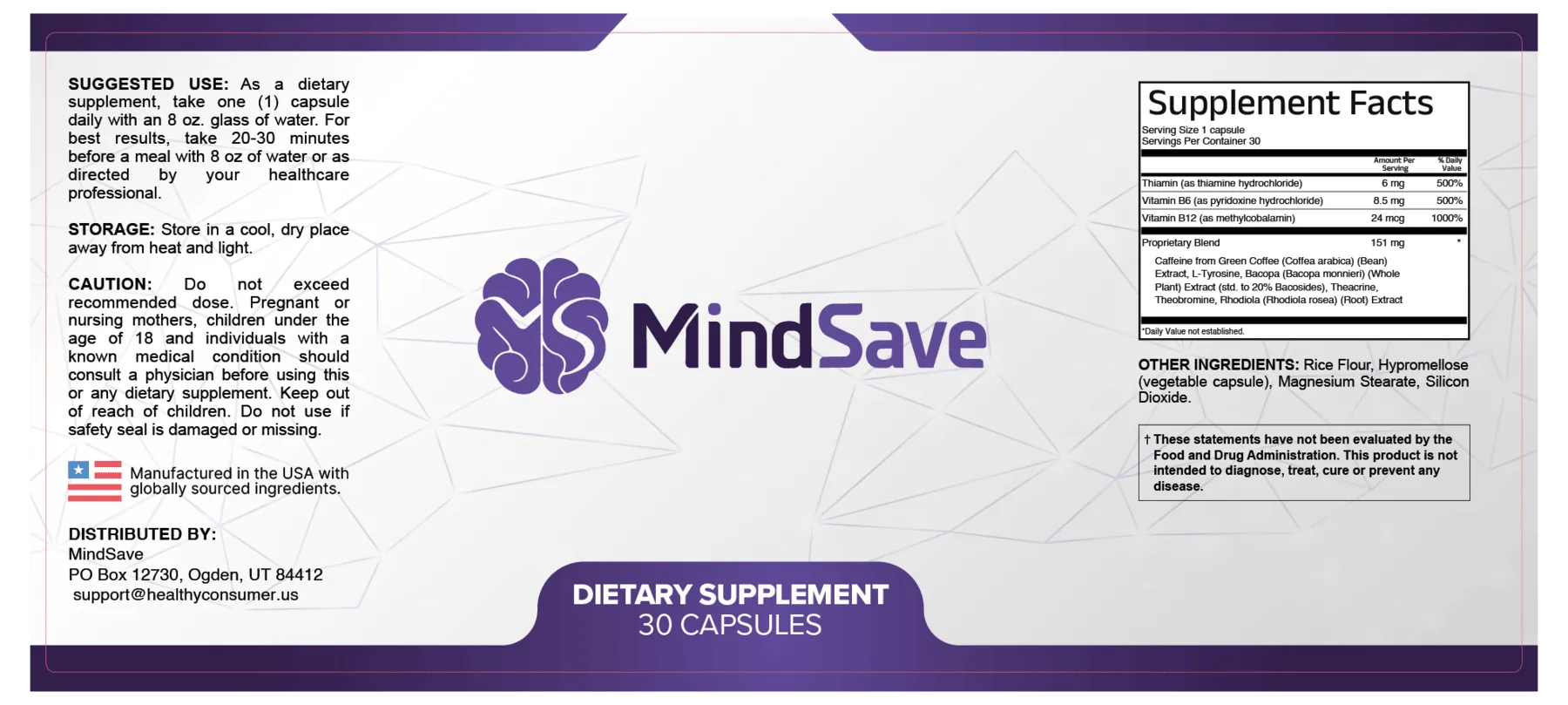
Now the second document. The label artwork supplied for this listing carries a full Supplement Facts panel. The table repeats what that panel prints. It is not a statement about the capsule you would receive.
| Row | Amount per serving | % Daily Value |
|---|---|---|
| Thiamin (as thiamine hydrochloride) | 6 mg | 500% |
| Vitamin B6 (as pyridoxine hydrochloride) | 8.5 mg | 500% |
| Vitamin B12 (as methylcobalamin) | 24 mcg | 1000% |
| Proprietary blend | 151 mg | Daily Value not established |
Inside the blend are caffeine from green coffee bean extract, L-tyrosine, bacopa extract standardised to 20% bacosides, theacrine, theobromine and rhodiola root extract. The other ingredients are rice flour, hypromellose (the vegetable capsule), magnesium stearate and silicon dioxide.
Step 3: Which names appear on both lists, and which on only one?
Lay the two lists next to each other. Three names are on both. Everything else is on one side only.
| On both documents | Sales page only | Label panel only |
|---|---|---|
| Vitamin B6 | Niacinamide | Thiamin |
| L-tyrosine | GABA | Vitamin B12 |
| Bacopa monnieri | Alpha GPC | Caffeine from green coffee |
| Phosphatidylserine | Theacrine | |
| Huperzine A | Theobromine | |
| Rhodiola |
The difference is not small. Caffeine, theacrine and theobromine are stimulants, and only one list carries them. If you avoid stimulants, are pregnant or nursing, manage blood pressure or already sleep badly, this step matters more than any other.
MindSave, on the official website
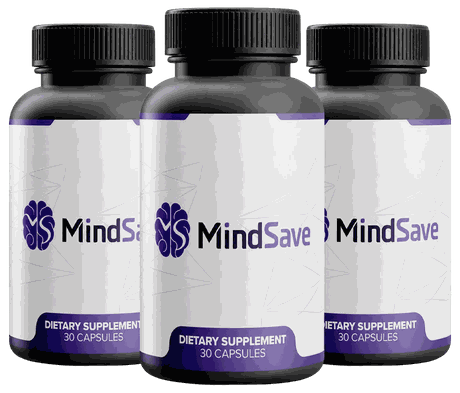
MindSave is a once-daily capsule with 30 in a bottle. Every pack has a 60-day money-back guarantee, which is your recourse if the bottle's panel is not what you expected.
See today's price and guaranteeDisclosure: Themindsave is the retailer and earns when an order is placed through this website.
Step 4: Is niacin the same as niacinamide?
People search this exact question, so here is the short version. They are not the same, but they are close relatives. Both are forms of vitamin B3. Niacinamide is the form that does not cause the skin flush that the other form is known for. The sales page uses the niacinamide form.
The numbers worth knowing come from the NIH Office of Dietary Supplements. For adults the RDA is 16 mg NE (men) or 14 mg NE (women), and for supplemental niacin the tolerable upper intake level is 35 mg daily. The sales page prints no niacinamide amount, so you cannot hold it up against that limit. Count the niacin in any other product you take instead.
Step 5: What is a proprietary blend, and why does the total matter?
A proprietary blend is a group of ingredients listed under one name, with one combined weight. 21 CFR 101.36 requires a blend to be labelled as one, to list its parts from heaviest to lightest, and to show the blend's combined weight on that line.
The artwork panel does that: a 151 mg total, with six ingredients named in order. What it does not show is how many milligrams each of the six contributes. So you can see the size of the whole but not the share of any part.
This retail desk makes no allegation about compliance. It has not held the physical panel from a current bottle, and a claim about a rule needs the bottle in hand. Your own bottle is the document that settles it.
Step 6: What should you do before the first capsule?
Reading is the first half. Acting on it is the second. Do these four things with the bottle in your hand.
- Find the Supplement Facts panel and note which formula it matches.
- Check for caffeine, theacrine and theobromine if you avoid stimulants.
- Add up vitamin B6 and niacin from every other product you take. Vitamin B6 is capped at 100 mg a day when food and supplements are counted together.
- Read the caution block, then write down the lot code on the base.
If the panel is not the formula you expected, phone +1 (302) 200-3480 and quote your order ID; the 60-day guarantee lets you return the bottles, empties too. For anything medical, ask a doctor or pharmacist and bring both lists.
Frequently asked questions
What is in MindSave?
Two documents answer that, and they disagree. One lists eight names with no amounts. The other, the label artwork, prints another formula built around a 151 mg proprietary blend. The seller vouches for neither, so read your bottle's panel.
Does MindSave contain caffeine?
That is not known. The sales-page names include none, while the artwork's blend starts with caffeine from green coffee bean extract and adds theacrine and theobromine. Anyone avoiding stimulants should read their bottle's panel before starting.
How many mg are in MindSave?
The sales page prints no amounts. The label artwork prints three vitamins and a 151 mg blend per capsule, but the seller does not assert it as the contents. Read your bottle.
Is niacin the same as niacinamide?
No, but both are forms of vitamin B3. Niacinamide is the form that does not cause the flush. The upper level for supplemental niacin is 35 mg a day, and the sales page prints no niacinamide amount.
Is huperzine A measured in mg?
No. Published trial doses are in micrograms: 200 or 400 micrograms twice a day in the largest placebo-controlled trial. Writing mg would be a thousand-fold error. The sales page gives no amount.
What should I read first on the bottle?
Read the serving size, the servings per container, the proprietary blend, the other ingredients and the caution block. Then note the lot code on the base and keep your order email.
Sources named in this article
- The NIH Office of Dietary Supplements fact sheet on niacin. https://ods.od.nih.gov/factsheets/Niacin-HealthProfessional/
- 21 CFR 101.36, the rule that sets what a Supplement Facts panel must carry. https://www.ecfr.gov/current/title-21/chapter-I/subchapter-B/part-101/subpart-C/section-101.36
Our view
A label is a promise written in small print, and MindSave gives you two of them. We think the right response is neither suspicion nor trust. It is a check. The seller has done the useful thing by printing both documents and refusing to pick a winner for you.
What we cannot tell you is which one ships. What we can tell you is how to find out in two minutes: turn the bottle around and read the panel. If it matches what you expected, carry on. If it does not, the guarantee exists for exactly that case.
This is general information about a label. It is not medical advice, and it does not replace a doctor who knows your history.
Last updated October 16, 2026. Medically reviewed by Dr. Ariel Frankel, PhD on October 16, 2026.
A plain note on what this is. MindSave is a dietary supplement, not a drug. It is not FDA approved, and no supplement is. It is not intended to diagnose, treat, cure or prevent any disease, and nothing in this article says it is a treatment for dementia, Alzheimer’s disease or mild cognitive impairment. Memory or thinking that changes in a way that worries you is a reason to see a doctor, not a reason to start a capsule. Talk to your doctor or pharmacist before use, above all if you take prescription medicine.
Take a look at MindSave when you are ready
When you are ready, the official website shows the current packs, any shipping and the guarantee terms before you pay. Read the panel on the bottle when it arrives.
See today's price and guaranteeDisclosure: Themindsave is the retailer and earns when an order is placed through this website.