MindSave Official Website › Notebook › Does MindSave Work? A 5-Step Fair Test and Timeline
Does MindSave Work? A 5-Step Fair Test and Timeline
Whether a supplement works for you is a question you can only answer yourself, and only if you run a fair test. Here is how to set one up, plus what the research does and does not say.
No published trial has tested MindSave as a finished product, so no one can say it works. Most first reports from buyers land at 3 to 4 weeks. Bacopa trials ran 12 weeks. A five-step fair test lets you judge your own result without fooling yourself.
- Evidence: research on single ingredients only; no published trial of the finished capsule.
- Buyer reports: a first change at 3 to 4 weeks, mostly. This is not a trial result.
- Bacopa: every trial in the published review ran 12 weeks.
- Huperzine A: the largest placebo-controlled trial ran at least 16 weeks.
- Seller's advice: three to six months of consistent use.
- Guarantee: 60 days. Nothing here claims to treat any condition.
Does MindSave really work, and can anyone say?
The answer in one line: nobody can say for sure. No published clinical trial has tested MindSave as a finished product. The research cited on the website concerns its named ingredients, usually tested one at a time, often at amounts the sales page does not print.
The label supports three modest things: sharper memory, clearer focus and everyday cognitive performance. It does not claim to treat, prevent or slow any condition. On top of that, the National Institute on Aging says it currently recommends no vitamin or supplement for preventing Alzheimer's or other cognitive decline. Keep that ceiling in mind as you read on.
How is MindSave meant to work, according to the pages?
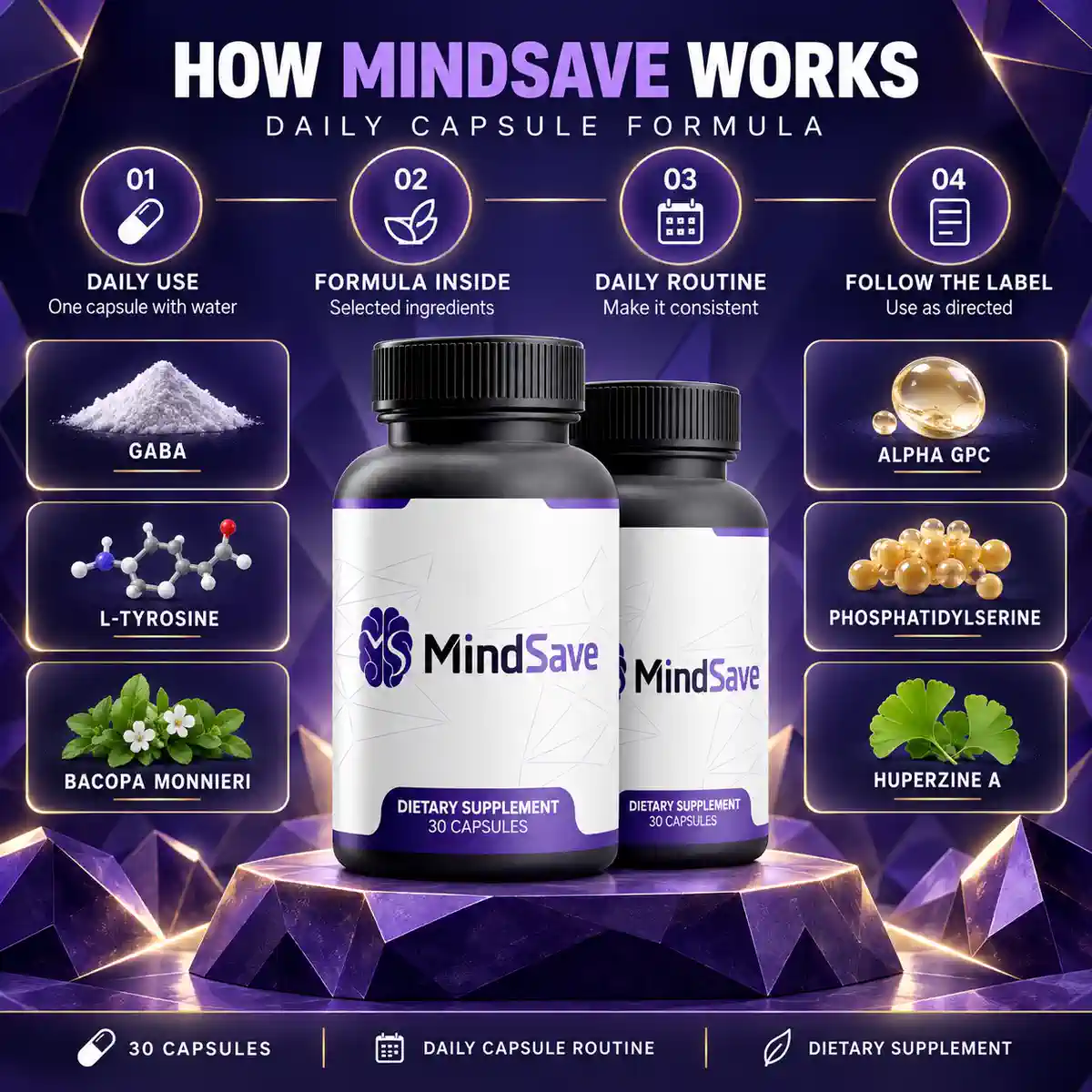
The sales-page list of eight names falls into three groups. Two are ordinary vitamins with published limits: niacinamide and vitamin B6. Three are things the brain builds with: L-tyrosine, alpha GPC and phosphatidylserine. Two act on signalling more directly: bacopa monnieri, the slowest and best-evidenced name, and huperzine A. The eighth name, GABA, is an amino acid the body also makes on its own, and it is usually associated with calm rather than recall.
Two cautions apply. First, no trial of the combination exists, so nothing can be said about the names acting together. The one trial that did combine two of them, GABA with tyrosine, found that task switching got worse in healthy volunteers, both on GABA alone and on GABA with tyrosine. It was small, with twelve people in each arm, and the authors call it preliminary. Second, the printed label artwork lists a different formula. So the description above covers the sales-page list, and it may not describe your bottle.
Step 1: Write down the start date and your baseline
Before the first capsule, write the date. Then, in a few plain lines, note what you want to change. Examples are names you forget, tasks you drop halfway or the hour of the day your focus fades. Be specific. A vague hope cannot be measured, and a memory of how you felt a month ago is poor evidence.
Keep it short. Three lines in a notes app is enough. The goal is a record you can compare against later.
Step 2: Change only one thing at a time
Sleep, caffeine, food, exercise and stress all move memory and focus. A new capsule started in the same fortnight as a new bedtime cannot be told apart afterwards. So hold the other things steady for the first few weeks, as far as real life allows.
This is also a safety point. If something feels off, you want to know what caused it. Change one thing and the answer is clearer.
Step 3: Why shouldn't you judge MindSave in week one?
Because nothing on the label or in the research has a week-one trial behind it. The numbers in the table are the ones to plan around.
| Number | Source | What it tells you |
|---|---|---|
| 3 to 4 weeks | Buyers writing to the seller | Where first reports mostly land. A report, not a measurement. |
| 12 weeks | Every bacopa trial in the published review | What a fair test of that ingredient looks like. |
| 16 weeks | The largest placebo-controlled huperzine A trial | Cited for length only; at the lower dose its main analysis showed no cognitive effect. |
| 3 to 6 months | The seller's own advice | The seller asks for consistent use. |
| 60 days | The guarantee window | How long you have to ask for a refund. |
The commonest complaint on the seller's review page concerns week one. Four of the eight published reviewers called it fair at a month and wished for more in the opening week. That is a gripe about a stretch the research never tested.
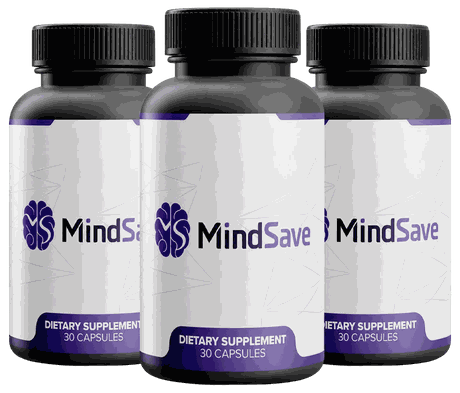
MindSave, on the official website
If you decide to run the fair test yourself, MindSave comes with a 60-day money-back guarantee on every pack. Your total and any shipping show at the checkout before you pay.
See today's price and guaranteeDisclosure: Themindsave is the retailer and earns when an order is placed through this website.
Step 4: What should you do at weeks three and four?
Look again at your baseline lines and write what you notice now. Do not trust memory alone. Be honest about all of it: no change, a small change, or a change you cannot separate from a better night's sleep. Each is a valid result.
Step 5: How do you decide, and by when?
Make two decisions, on two dates. The first is the refund decision, by day 60, while the guarantee is open. The second is the product decision, around week 12, if you want the length of test the bacopa research used. Those dates are about 24 days apart, and they are different questions.
If you stop at day 60 and ask for a refund, you have used the guarantee as intended. If you carry on past it, you do so knowing the window is closed. Either is fair. Choosing without knowing the two dates is not.
Are there MindSave before-and-after results, and what about other brain supplements?
No before-and-after photos or measured MindSave results are published. A lit brain in an illustration is a picture, not a result. Reviews are short buyer lines, and the seller says individual results vary.
Do brain supplements help, and do memory supplements really work? Do focus supplements work? For brain, memory and focus supplements in general, the same fair-test rules apply. NCCIH's seven things to know is a good place to start, and the ingredient research is mixed. The bacopa systematic review found improved free recall on nine of seventeen memory tests in adults without cognitive impairment, and little elsewhere. Cochrane found no eligible placebo-controlled trial of huperzine A in mild cognitive impairment at all.
Frequently asked questions
Does MindSave work?
That is not known. No published trial has tested MindSave as a finished product. The research cited on the website is on single ingredients, and it is mixed.
Does MindSave really work for memory and focus?
The label supports sharper memory, clearer focus and everyday cognitive performance, but this website cannot show proof for the finished capsule. A fair personal test is the best check.
How long does MindSave take to work?
First reports from buyers mostly arrive at 3 to 4 weeks. Every bacopa study in the published review ran for 12 weeks, and the seller recommends three to six months of steady use.
How does MindSave work?
The sales-page ingredients fall into groups: two vitamins, three building blocks and two that act on signalling, plus GABA, an amino acid the body also makes. No trial of the combination exists, and the label artwork lists a different formula.
Are there MindSave before and after results?
No before-and-after photos or measured outcomes are published. Reviews are short buyer lines and are not typical results.
Do brain supplements work in general?
The evidence is mixed, and the National Institute on Aging does not currently advise taking any vitamin or supplement as protection against Alzheimer's or other cognitive decline. Memory changes that worry you are a reason to see a doctor.
Sources named in this article
- NCCIH's seven things to know about supplements and cognitive function. https://www.nccih.nih.gov/health/tips/things-to-know-about-dietary-supplements-for-cognitive-function-dementia-and-alzheimers-disease
- The randomised trial that gave GABA and tyrosine together. https://pubmed.ncbi.nlm.nih.gov/33919136/
- Pase 2012, the systematic review that reports the trial doses. https://pubmed.ncbi.nlm.nih.gov/22747190/
- The Cochrane review of huperzine A in mild cognitive impairment. https://pubmed.ncbi.nlm.nih.gov/23235666/
- The National Institute on Aging on cognitive health. https://www.nia.nih.gov/health/brain-health/cognitive-health-and-older-adults
Our view
We cannot tell you that MindSave works, and we would distrust any page that did. What we can offer is a way to find out for yourself without being fooled. Write the date, hold the rest steady, wait past week one, look at weeks three and four, and decide twice.
The timeline is the most useful number in this field, because it is always published and never depends on an amount somebody left off the label. A fair test costs nothing but patience.
If you notice your memory or thinking shifting in ways that trouble you, please see a doctor. A capsule is not an assessment.
Last updated October 16, 2026. Medically reviewed by Dr. Ariel Frankel, PhD on October 16, 2026.
A plain note on what this is. MindSave is a dietary supplement, not a drug. It is not FDA approved, and no supplement is. It is not intended to diagnose, treat, cure or prevent any disease, and nothing in this article says it is a treatment for dementia, Alzheimer’s disease or mild cognitive impairment. Memory or thinking that changes in a way that worries you is a reason to see a doctor, not a reason to start a capsule. Talk to your doctor or pharmacist before use, above all if you take prescription medicine.
Take a look at MindSave when you are ready
The official website has the current packs and the guarantee terms. Mark day 60 and week 12 on a calendar before you start, and keep the order email.
See today's price and guaranteeDisclosure: Themindsave is the retailer and earns when an order is placed through this website.